
If you’ve ever stepped into your garage and thought, “There has to be a better way to keep this floor clean” — you’re not wrong. Between salt stains, oil drips, and crumbling concrete, unsealed garage floors take a beating — especially in Canada.
That’s where epoxy garage flooring comes in.
More than just a slick finish, epoxy creates a sealed, durable surface that protects your concrete and makes the whole garage easier to live with. Whether you’re parking your car, setting up a home gym, or just trying to keep the space dust-free, epoxy flooring in garage spaces has become a go-to upgrade for good reason.
But like anything, it’s not one-size-fits-all.
In this guide, we’ll break down the real benefits of garage floor epoxy, the pros and cons, common misconceptions, and what you should know before booking your install. We’ll also talk costs, coating types, and whether epoxy makes sense for your home, climate, and lifestyle.
What Is Epoxy Garage Flooring? (And Why It’s Gaining Ground in Canada)
Let’s start simple: what is epoxy garage floor coating, and why is everyone suddenly talking about it?
Epoxy flooring for garages is a resin-based system that, when applied to concrete, cures into a durable, smooth, sealed surface. It’s not just paint — epoxy chemically bonds with your floor to protect it against wear, weather, and everyday abuse.
In short, garage floor epoxy is about more than looks. It gives your space structure, strength, and a finish that actually lasts — especially under the pressures of Canadian life.
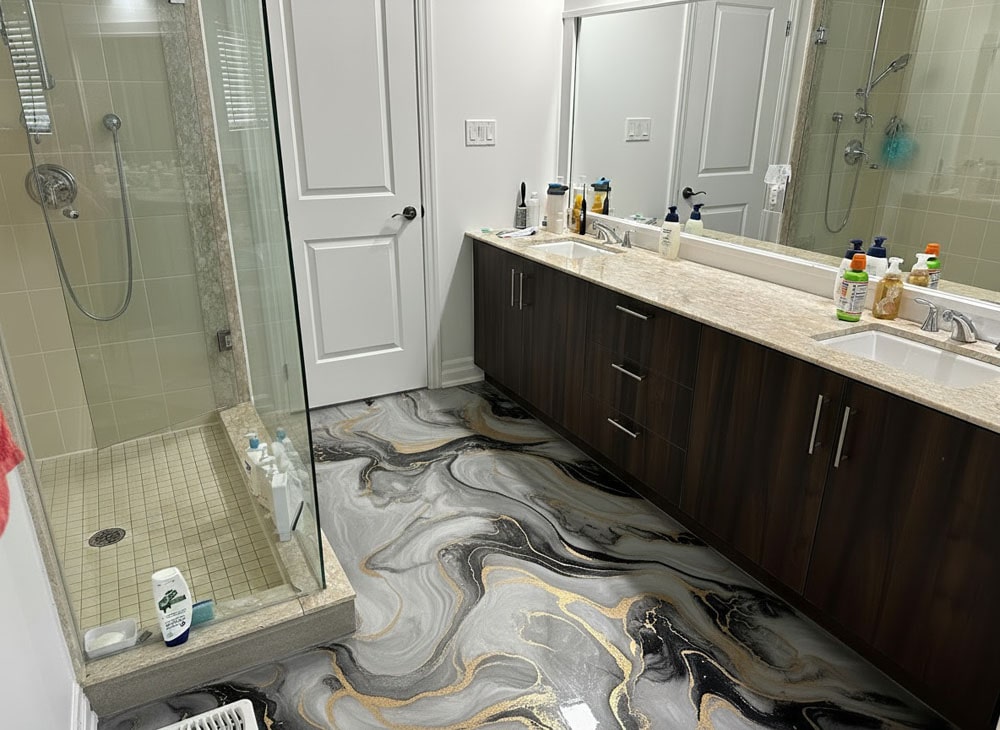
Top Benefits of Epoxy Garage Floors
Let’s dig into why epoxy your garage floor in the first place. Here are the standout benefits of epoxy flooring in garage settings — from day-to-day use to long-term value.
- Built to Handle What You Throw at It – From car tires and bikes to home gym gear and winter salt, epoxy garage flooring holds up under real-life traffic. It’s impact-resistant, crack-resistant, and doesn’t peel like old garage paint.
- Chemical and Salt Resistance – Brake fluid. Gasoline. Road salt. Battery acid. Spills happen — especially in garages. The good news? Epoxy flooring benefits include resisting all of the above. No stains, no damage, no problem.
- Cleaner, Brighter Spaces – With epoxy floors in garage spaces, the difference is visual too. Glossy finishes reflect light, while flakes or quartz add texture. It’s not just about aesthetics — it’s about turning your garage into a usable, modern extension of your home.
- Easy to Clean, Low Maintenance – Concrete sheds dust and soaks up spills. Epoxy garage floors don’t. A quick sweep or light mop and your floor stays fresh.
- Anti-Slip Safety Add-Ons – High-gloss floors can be slippery — especially with snow or slush. That’s why we offer slip-resistant finishes, including quartz blends and textured flakes.
- Long-Term Protection – With professional installation and proper prep, epoxy garage floor benefits can last 5–15+ years. That’s protection and peace of mind — without constantly resealing or repainting.
Epoxy Garage Floor Pros and Cons Every Homeowner Should Know
With all types of flooring, there are both advantages and disadvantages. Let’s talk garage floor epoxy pros and the things to be mindful of.
Advantages of Epoxy Garage Floor Coatings:
- Long-lasting surface that won’t peel
- Strong defense against stains, salts, and scratches
- Easy to maintain — no dust, no grime
- Custom styles (flakes, metallics, solids)
- UV-resistant topcoats available
- Boosts your property value
The Trade-Offs:
- Slippery if not textured
- Needs expert surface prep (grinding, repairs)
- Can take up to 5 days to cure fully
- Doesn’t adhere to damp or uncured concrete
- Removal is tough if you ever want a different finish
So, is epoxy good for garage floor surfaces? Yes — but only when installed correctly and in the right setting.

Is Epoxy Flooring in Your Garage Worth It?
If you’ve been asking, “Should I epoxy my garage floor?” or “Is an epoxy garage floor worth it?” — this section is for you.
Yes, if:
- Your slab is dry and in good condition (or repairable)
- You want something durable that still looks sharp
- You’re sick of salt stains, cracks, or dust
- You want to use the garage year-round — for more than just parking
Maybe not, if:
- Your floor has serious moisture issues that haven’t been addressed
- You plan to redo the space frequently
- You’re expecting a quick weekend DIY (spoiler: epoxy is not that)
Why You Should Consider Coating Your Garage Floor
You don’t have to epoxy your floor. But there are a few good reasons why to epoxy garage floor surfaces — especially in climates like ours.
- Bare concrete breaks down fast – Unsealed concrete absorbs water, stains easily, and cracks with freeze/thaw cycles. That’s a yearly headache in Ontario.
- Epoxy seals, strengthens, and smooths – It creates a moisture barrier, making it harder for water, road salt, or oil to penetrate your slab.
- It’s more than cosmetic – You’re not just “prettifying” your garage. You’re protecting it — and extending its life. So if you’ve wondered, “Why coat garage floor concrete at all?” — this is your answer. Epoxy isn’t just about appearances. It’s about smart, functional upgrades.
Types of Epoxy Flooring for Garage Use
There’s no one-size-fits-all. Here’s a breakdown of types of epoxy flooring for garage spaces — so you can find one that fits your needs (and your budget).
|
Type |
Use-Case |
Visual |
|---|---|---|
|
Solid Colour Epoxy |
Simple, clean setups |
Sleek and polished |
|
Flake Broadcast Epoxy |
Family garages, high use |
Textured, anti-slip |
|
Metallic Epoxy Coating |
Luxury spaces, show garages |
Swirled, high-gloss look |
|
Epoxy + Polyaspartic |
Fast installs, UV exposure |
Durable, weather-ready |
How to Clean and Maintain Your Epoxy Garage Floors
One of the biggest benefits of epoxy flooring in garage settings is how little effort it takes to keep things looking sharp. But while epoxy is low maintenance, it’s not no maintenance. Here’s how to clean it right and make sure it holds up for the long run.
Weekly or Biweekly: Quick Clean
- Sweep or dust mop to remove sand, leaves, and grit — especially in high-use areas.
- For deeper dust, use a soft-bristle push broom or microfiber mop works best.
Monthly: Wet Mop for Shine
- Mix a pH-neutral floor cleaner (no citrus or vinegar) with warm water.
- Use a microfiber mop or soft sponge mop — avoid stiff bristles that can dull the finish.
- Rinse with clean water if needed to avoid streaks.
What to Avoid
- No harsh chemicals like bleach, ammonia, or citrus-based cleaners — they can cloud the surface over time.
- Avoid abrasive pads or steel wool — these can scratch the topcoat, especially on high-gloss floors.
In Winter: Handle Salt and Slush
In Canadian garages, road salt is your floor’s worst enemy. While epoxy resists salt damage, regular clean-up helps it last longer:
- Keep a mat or tray at the garage entrance to catch snow and slush.
- Rinse off salt buildup weekly using a light soap-and-water mix.
- Every 2–5 Years: Recoat or Refresh (If Needed)
A quality epoxy system can last over a decade — but depending on use and UV exposure, a topcoat refresh every few years helps protect shine, grip, and color.
A little effort goes a long way. With just basic upkeep, your epoxy garage flooring stays clean, slip-safe, and showroom-worthy for years.
Frequently Asked Questions
Final Verdict: Are Epoxy Garage Floors Worth It?
Yes, absolutely, It’s an investment at first but completely worth it as part of your home renovation project. For those who use the garage daily — whether it’s for cars, kids’ gear, workouts, or storage — epoxy is a functional upgrade with long-term value. When you’re ready to turn your garage into a space that you can be proud of, call Epoxy Dude to schedule your free site assessment.